Mediterranean Tile Lemon Patterns: A Comprehensive Evaluation for Digital Designers and Crafters
In the realm of digital design and paper crafting, visual assets serve as the foundational layer upon which creative projects are built. Among the vast array of available textures and motifs, Mediterranean Tile Lemon Patterns have emerged as a distinct and versatile choice for designers seeking to evoke warmth, vibrancy, and cultural richness. This specific aesthetic combines the geometric precision of traditional Mediterranean tiling with the organic, cheerful symbolism of citrus fruit. For professionals and hobbyists alike, understanding the nuances of this pattern set is crucial for making informed decisions about resource acquisition and application.
This evaluation explores the characteristics, utility, and comparative advantages of using Mediterranean Tile Lemon Patterns in various creative contexts. By examining the technical specifications, potential use cases, and limitations, readers can determine whether this asset aligns with their specific project requirements.
Defining the Aesthetic: What Makes It Distinct?
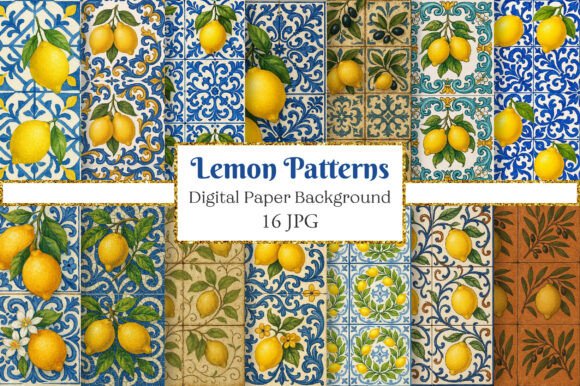
The term "Mediterranean Tile Lemon Patterns" refers to a collection of digital backgrounds that merge two powerful visual traditions. The first element is the tile work characteristic of regions such as Southern Italy, Spain, Greece, and Morocco. These designs typically feature intricate geometric shapes, repeating motifs, and a color palette dominated by blues, whites, terracottas, and yellows. The second element is the lemon motif, which introduces a focal point of bright yellow, often stylized with leaves or integrated into the geometric grid.
What distinguishes this style from generic floral or abstract patterns is its structured balance. Unlike free-form watercolor designs, these patterns offer the stability of tessellation, making them ideal for backgrounds where text needs to be overlaid without compromising readability. The inclusion of lemons adds a seasonal and sensory dimension, suggesting freshness, summer, and zest. This combination creates an atmosphere that is both sophisticated and approachable, bridging the gap between high-end graphic design and whimsical craft aesthetics.
Technical Specifications and Workflow Integration
For digital creators, the technical quality of an asset is just as important as its visual appeal. The specific set of Mediterranean Tile Lemon Patterns under review offers several key features that facilitate seamless integration into professional workflows:
- Resolution and Clarity: At 300 dpi (dots per inch), these images meet the standard requirement for high-quality printing. This ensures that when used in physical crafts like scrapbooking or packaging, the details of the tile grout and lemon textures remain crisp and free from pixelation.
- Dimensions: The 12″ x 12″ size is a critical standard in the scrapbooking and digital planning community. It allows for direct compatibility with existing templates, cutting mats, and layout grids, reducing the need for complex resizing or cropping adjustments.
- Format Flexibility: Provided in JPG format, these files are universally compatible with almost all design software, including Adobe Photoshop, Illustrator, Canva, and Microsoft Publisher. While vector formats (like SVG or EPS) offer infinite scalability, JPGs provide a lightweight solution for raster-based editing and quick background placement.
- Scalability: The prompt notes that these patterns are easy to resize with different software. This is particularly useful for designers who need to adapt a single asset for multiple outputs, such as a social media banner and a printed invitation card.
Comparative Analysis: Alternatives and Contextual Fit
When selecting digital papers, creators often face a choice between Mediterranean Tile Lemon Patterns and other popular themes, such as minimalist florals, rustic wood textures, or modern geometric abstractions. Understanding these tradeoffs helps in choosing the right tool for the job.
Versus Minimalist Florals
Minimalist floral patterns are often chosen for their subtlety and elegance. They tend to have more negative space, making them excellent for text-heavy designs like wedding invitations. However, they may lack the visual "pop" required for attention-grabbing social media banners. Mediterranean Tile Lemon Patterns, with their bold colors and defined structures, offer higher visual impact. They are better suited for projects where the background needs to contribute significantly to the mood, such as summer-themed party invites or vibrant blog headers. If the goal is understated elegance, florals may be preferred; if the goal is energetic vibrancy, the tile-lemon combination is superior.
Versus Rustic Wood or Stone Textures
Rustic textures provide a grounded, earthy feel suitable for artisanal branding or autumn-themed projects. They convey warmth through material realism rather than color. In contrast, Mediterranean Tile Lemon Patterns convey warmth through color psychology (yellow and blue). The tile pattern also offers more structural rigidity, which can help organize chaotic design elements, whereas organic wood grain can sometimes compete with foreground content for attention. For clean, modern layouts, the geometric nature of the tile pattern provides better control over alignment and spacing.
Versus Abstract Geometrics
Abstract geometrics are timeless and neutral, fitting into any brand identity. However, they can sometimes feel cold or corporate. The addition of the lemon motif injects personality and narrative into the design. It tells a story of place (the Mediterranean) and season (summer/harvest). For brands or events looking to communicate a specific vibe—such as a beach wedding, a citrus-themed bakery, or a travel blog—the themed pattern is more effective than a neutral abstract shape.
Strategic Use Cases and Applications
The versatility of Mediterranean Tile Lemon Patterns allows it to span multiple categories of creative output. Below are specific scenarios where this asset class shines:
Event Stationery and Announcements
Weddings, birthdays, and baby showers often rely on thematic consistency. A Mediterranean theme suggests luxury, relaxation, and celebration. Using these patterns for invitations, birth announcements, or thank-you cards creates an immediate emotional connection. The 12″ x 12″ size is perfect for creating full-page cards or layered embellishments. The high resolution ensures that fine details, such as the texture of the lemon peel, are visible even when printed at smaller sizes.
Digital Content Creation
For bloggers and social media managers, visual consistency is key to brand recognition. These patterns can serve as headers for blog posts, background overlays for Instagram stories, or cover images for Pinterest pins. The bright yellow draws the eye, increasing click-through rates in crowded feeds. Because the patterns are digital downloads, users can quickly swap out backgrounds to match different content topics while maintaining a cohesive brand aesthetic.
Crafting and Scrapbooking
In the physical crafting world, paper weight and texture matter. While this product is a digital download, the 300 dpi resolution ensures that when users print the files on cardstock or photo paper, the results rival commercial-grade digital papers. Crafters can use these patterns as base layers, then add die-cuts, stickers, or handwritten elements. The geometric nature of the tiles makes it easier to align photos and journaling blocks compared to busy, chaotic patterns.
Packaging and Branding
Small businesses selling artisanal goods, such as olive oil, ceramics, or homemade preserves, can use these patterns for product labels and packaging. The Mediterranean association reinforces the origin or flavor profile of the product. The lemon motif specifically pairs well with food-related items, suggesting natural ingredients and fresh flavors.
Evaluating Limitations and Considerations
No single asset fits every purpose. It is important to acknowledge the limitations of Mediterranean Tile Lemon Patterns to ensure realistic expectations.
First, the strong thematic nature of the design means it is not neutral. It is ill-suited for corporate reports, academic papers, or somber memorial services where a subdued, professional tone is required. The brightness and cultural specificity limit its applicability to casual, festive, or lifestyle-oriented projects.
Second, while the JPG format is convenient, it lacks the editability of vector files. Users cannot easily change the color of a specific tile or isolate a lemon shape without using complex masking techniques in photo editing software. For users requiring extensive customization, investing in vector-based assets might be a better long-term strategy.
Finally, the reliance on a specific color palette (blues, whites, yellows) may clash with existing brand guidelines that prioritize reds, greens, or monochromatic schemes. Designers must evaluate their existing color library before integrating these patterns to avoid visual discord.
Decision Framework: Is This Right for You?
To decide whether to incorporate Mediterranean Tile Lemon Patterns into your workflow, consider the following checklist:
- Do you need a warm, energetic, or summery vibe? If yes, this pattern set is highly recommended. If you need a cold, serious, or minimalist tone, look elsewhere.
- Are you working within standard scrapbooking dimensions? The 12″ x 12″ format is ideal for this. If you are working in non-standard sizes frequently, ensure your resizing tools maintain the aspect ratio and resolution.
- Is print quality a priority? With 300 dpi resolution, these files are print-ready. If you only need web-resolution images (72 dpi), these files will still work but may be larger than necessary for simple screen display.
- Do you value immediate usability? As a digital download with no shipping time, this option is superior for last-minute projects. If you prefer tactile samples before purchase, this model does not apply.
In conclusion, Mediterranean Tile Lemon Patterns represent a high-value asset for designers and crafters who appreciate the intersection of geometric structure and vibrant thematic elements. By offering high-resolution, standardized files that are easy to resize and widely compatible, this set addresses many common pain points in digital asset management. While it is not a universal solution for every design challenge, it excels in applications requiring warmth, clarity, and cultural resonance. For those building a library of seasonal or lifestyle-focused graphics, adding this variety to one’s collection is a prudent and aesthetically pleasing decision.