Evaluating Dutch Folk Art Seamless Patterns for Rustic and Vintage Design Projects
In the realm of digital design and textile creation, the pursuit of authenticity often leads creators back to traditional motifs. Among these, Dutch Folk Art Seamless Patterns have emerged as a distinctive choice for those seeking to infuse their work with historical charm and visual warmth. These patterns are not merely decorative; they represent a specific aesthetic lineage rooted in the cultural heritage of the Netherlands, characterized by its meticulous craftsmanship and pastoral simplicity. For designers, crafters, and hobbyists aged 20 to 50 who are evaluating resources for farmhouse decor, kitchen renovations, or digital scrapbooking, understanding the nuances of this style is essential before making a final selection.
The core appeal of Dutch folk art lies in its ability to bridge the gap between rustic utility and refined elegance. Unlike generic vintage styles that may borrow loosely from various eras, Dutch folk art possesses a recognizable signature: the interplay of deep blues, crisp whites, and earthy tones, often arranged in repeating, symmetrical layouts. When applied as seamless patterns, these designs offer a practical solution for large-scale applications while maintaining visual continuity. This article explores what makes these patterns distinct, how they compare to other popular styles, and whether they align with your specific project requirements.
Defining the Aesthetic: Blue Tiles and Floral Motifs
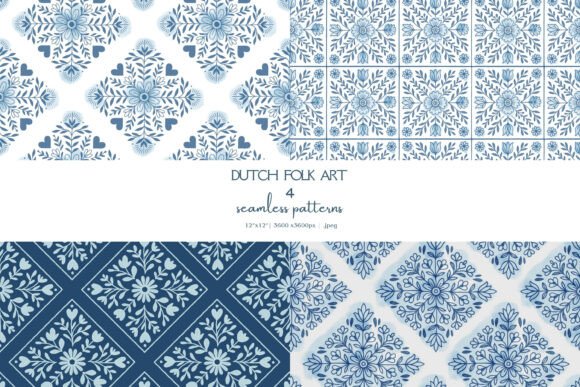
To evaluate whether Dutch Folk Art Seamless Patterns are the right fit for your needs, it is crucial to first understand their defining characteristics. The most prominent feature of this style is the influence of Delftware, the famous tin-glazed pottery produced in the Netherlands since the 17th century. In digital pattern form, this translates into intricate blue-and-white compositions that mimic the look of hand-painted ceramic tiles.
These patterns typically feature:
- Floral Tile Motifs: Stylized flowers, such as tulips, roses, and windflowers, are often enclosed within geometric borders or lattice structures. These elements provide a sense of order and structure that appeals to lovers of cottagecore and traditional aesthetics.
- Rustic Textures: High-quality sets often include subtle distressing or grain effects to simulate the texture of aged paper, fabric, or worn tile. This adds depth and prevents the digital image from appearing too flat or artificial.
- Repetitive Symmetry: The "seamless" nature of these files means that the edges align perfectly, allowing the pattern to repeat infinitely without visible breaks. This is critical for background textures in web design, wrapping paper, or wallpaper.
When you select a set that includes 4 x 2 seamless pattern tiles, you are often getting a curated collection that offers variety within a cohesive theme. For instance, one tile might focus on dense floral clusters, while another emphasizes open space with minimalistic border designs. This variety allows for layering and mixing, providing greater creative flexibility than a single, monolithic pattern.
Technical Specifications and Practical Application
For professional designers and serious hobbyists, technical specifications are just as important as visual appeal. The viability of a digital asset depends heavily on its resolution and format. A standard expectation for print-ready materials is a resolution of 300dpi at a size of 3600 x 3600 pixels. This ensures that when the pattern is printed on large surfaces, such as kitchen backsplashes or fabric yardage, the details remain sharp and free from pixelation.
Here is a breakdown of why these specific metrics matter for different use cases:
- Print Quality: At 300dpi, the file quality is sufficient for high-end offset printing and commercial textile production. If you are planning to create physical products like tote bags, aprons, or greeting cards, this resolution is non-negotiable for a professional finish.
- Scalability: While vector graphics are often preferred for infinite scalability, raster images at 3600x3600px offer a robust balance between file size and detail. They are large enough to serve as full-page backgrounds but small enough to be manageable in software like Adobe Photoshop or Illustrator.
- Format Compatibility: Most premium pattern sets are provided in .jpeg format. While .png files preserve transparency, .jpeg is widely compatible across all design platforms and is generally smaller in file size, making it easier to handle bulk projects. However, users should ensure the jpeg compression is low to avoid artifacts in the delicate blue lines.
It is worth noting that some creators may offer lower-resolution previews. Always verify that the product description explicitly states the final deliverable is high-resolution. A pattern that looks charming in a thumbnail may reveal jagged edges when zoomed in, rendering it useless for detailed crafts.
Comparing Dutch Folk Art to Other Vintage Styles
When researching design assets, consumers rarely encounter only one option. To make an informed decision, it is helpful to compare Dutch Folk Art Seamless Patterns against similar categories, such as French Country, Shabby Chic, or Scandinavian Minimalist styles. Each has distinct strengths and tradeoffs.
Vs. French Country: French Country designs often feature softer pastels, gilded accents, and more ornate, rococo-inspired flourishes. While both styles evoke a sense of history, Dutch folk art is generally more grounded and rustic. It lacks the opulence of French Country, making it a better choice for spaces or projects aiming for a cozy, lived-in feel rather than formal elegance. If your goal is to create a serene, uncluttered environment, Dutch patterns may be preferable due to their cleaner lines and limited color palette.
Vs. Shabby Chic: Shabby Chic tends to rely on distressed whites, faded pinks, and romantic imagery like cherubs or vintage teacups. Dutch folk art shares the "distressed" element but diverges in subject matter. The blue-and-white motif of Dutch art is more graphic and bold compared to the soft, washed-out look of Shabby Chic. For kitchen tiles or cabinetry, Dutch patterns can provide a stronger visual anchor, whereas Shabby Chic might blend too softly into the background.
Vs. Scandinavian Minimalism: Modern Scandinavian design often strips away ornamentation in favor of functionality and light colors. While there is overlap in the use of white space, Dutch folk art introduces complexity through its intricate floral borders. If you find Scandinavian design too sterile, incorporating a Dutch folk art seamless pattern can add necessary character and warmth without overwhelming the space. It serves as an excellent accent style that bridges the gap between modern clean lines and traditional comfort.
Evaluating Tradeoffs and Limitations
No design resource is perfect, and understanding the limitations of Dutch Folk Art Seamless Patterns is key to avoiding disappointment. One potential drawback is the specificity of the aesthetic. The strong association with blue tiles and rural motifs may not suit every interior design scheme. For example, in a modern industrial loft with exposed brick and metal fixtures, traditional floral tiles might clash unless used sparingly as a deliberate contrast.
Additionally, the repetitive nature of seamless patterns requires careful placement. Because the design repeats, it can become predictable if tiled incorrectly. Designers must consider the scale of the pattern relative to the surface area. A highly detailed 3600x3600px pattern might appear cluttered if shrunk down too much for a small craft project, or conversely, lose its intricate details if stretched excessively on a large wall mural. Testing the pattern at actual size before committing to a full print run is a recommended best practice.
Another consideration is the digital vs. physical translation. The crispness of digital blue lines may not always replicate the organic variation of hand-painted ceramics. If you are seeking an artisanal, one-of-a-kind look, a printed seamless pattern will inherently lack the uniqueness of a handcrafted piece. However, for consistency and cost-effectiveness in mass production or DIY home decor, the digital format offers superior precision.
When to Choose Dutch Folk Art Patterns
Despite these considerations, Dutch Folk Art Seamless Patterns remain a powerful tool for specific scenarios. They are particularly well-suited for:
- Farmhouse Decor: The rustic charm aligns perfectly with the current trend toward warm, inviting home environments. Using these patterns on cabinet fronts, table runners, or accent walls can instantly elevate a space.
- Kitchen Tiles: As mentioned, the resemblance to real Delft tiles makes them ideal for virtual room planners or for creating custom tile decals. They offer the look of expensive tiling at a fraction of the cost.
- Crafts and Scrapbooking: For enthusiasts of paper crafts, the high-resolution .jpeg files allow for precise cutting and layering. The thematic consistency of a 4-tile set ensures that mixed-media projects maintain a unified visual language.
- Digital Design: Bloggers and social media managers looking for a "cottagecore" aesthetic can use these patterns for website backgrounds, email headers, or printable planners. The neutral blue-and-white palette is versatile enough to pair with various typography choices.
Conversely, if your project demands vibrant, multicolored maximalism or ultra-modern geometric abstraction, this style may not be the optimal choice. In such cases, exploring contemporary abstract patterns or mid-century modern graphics might yield better results.
Conclusion for Decision Makers
Selecting the right design asset involves balancing aesthetic preference with practical constraints. Dutch Folk Art Seamless Patterns offer a timeless, elegant solution for those drawn to the quiet beauty of European rural traditions. With their high-resolution capabilities and thematic coherence, they provide a reliable foundation for both digital and physical creations. By understanding their distinct characteristics—particularly the blue tile motifs and rustic textures—and comparing them against other vintage styles, you can determine if this specific aesthetic aligns with your creative vision. Whether you are renovating a kitchen, designing a brand identity, or crafting handmade gifts, these patterns bring a touch of enduring charm that transcends fleeting trends.